It has been an eventful summer. I have completed the writing of my novel and I have withdrawn from the writing competition which initially prompted this blog.
There is something inherently selfish in completing a novel. I have created a book filled with imagined characters: a scarred girl from Northern England with a fiery temper and a story-teller's tongue; an abandoned young boy who lives in a world filled with polar bears and ice-caps, motor cars and flying machines; a middle-aged Irish cook with a lust for good food and tasty men; a Liverpudlian giantess who thaws the heart of a frozen Slavic serving maid; an eccentric Russian doctor who is the founding member of the New York Optimists' Society. It is a book about immigration and story-telling, a book about how we fictionalize history as a route towards imagining an alternative future, a book about how far we can escape from the truth before it catches hold of us once more.
Alongside the final stages of my writing, I was also imagining my own future: I thought I was destined to take part in a reality television show in which I could showcase my story, improve my craft, and explore ways of marketing my book. I imagined myself as an apprentice to the publishing world, learning valuable lessons from a wide-ranging panel of literary experts. Imagination can be a valuable asset in dreaming of one's possible future, but it is not a reliable planning tool when one is dependent upon the whims of other people. Since May, the competition has changed dramatically: it will no longer be filmed for television, the competition winner will be awarded a prize which has shrunk considerably over the past four months, the format of the show has shifted, and the financial costs of involvement have increased exponentially. Whereas I imagined something akin to American Idol where the judges would coach contestants, it now seems (although it has been difficult to gain any clear information regarding the actual format of the show) that the judges will have little impact upon participants' professional development.
Participation in this competition demands a significant investment of my time and money, and it no longer represents the best possible investment for my own writing career. I don't doubt that this remains a good opportunity for the right person - the winner is guaranteed publication and a national book launch - but it is no longer the kind of opportunity I want. If I was a successful contestant on American Idol I would be a better singer by the end of the show because of the judges' expert input, I wouldn't only build a brand for a song I could already sing.
I wish the remaining four contestants the best of luck, and I know all their books will be well worth reading. In contrast, it is possible that I am taking the road most traveled: over the coming months I will be following in the footsteps of the majority of first-time novelists, many of whom never reach publication. I will be attending conferences, meeting with agents, and sending out my manuscript (knowing the statistical likelihood of it ending up in a slush pile). I'm one among many, but I have imagination, a hunger to learn, a good tale wrapped up in the pages of my book, and the same degree of optimism as the characters in my novel. This blog will continue to tell the story of that journey: it might be another path, but I'm continuing to move forwards.
This blog details the journey of my first novel, Frogsbone - a story about immigration and story-telling in 1908 New York. Thank you for visiting!
Friday, August 30, 2013
Sunday, June 23, 2013
Lesson Two: The challenges of defining my project
I want to define my project - I need to define my project so that I can articulate well what it is that I am attempting to do - but my project is not an easy one to explain. I have explored the purposes of writing per se in a recent guest blog for Cafe Aphra, but the blog on this page explores in more detail my purposes in writing Frogsbone.
How to explain writing a novel? As I redraft and rework Frogsbone's final chapters, I find myself pulled in different directions. On the one hand, I find myself driven by the valid concerns of my intended audience (represented by the show's judges, reviews of contemporary literature, and feedback from the writing groups I engage with), but, on the other hand, I am being led (astray?) by my 'muse' (who appears to answer, rather defiantly, solely to the world of my book and the possibility of a bit of beauty).
I am sure life would be simpler if I allowed myself to be driven solely by the needs and expectations of my intended reader. I can imagine, for example, a person who consciously decides to write a 'best-seller'. They would research the things that book reviewers will acclaim, read-up on the similarities between books that are best-sellers, and carry out focus group research with book groups; following this research they would compile a checklist of things that their book must cover and check-off each feature as their writing progresses. Their book would be well-researched, well-managed, and would probably sell extremely well. I can imagine that person, because when I wrote as an academic, I knew how to do this: tailoring my writing (and sometimes my research findings) to meet the expectations and requirements of different academic journals and conference audiences. It's commonly done - it's what most people need to do if they are to be successful within the Academy - but it doesn't feed the soul and, I would argue, it's not what good writers do.
In fact, over one hundred years ago, Oscar Wilde was explicitly cautioning against this kind of an approach to writing (and thanks to Niall Griffiths for directing me towards Wilde's essay, 'Soul of Man Under Socialism'):
I don't want to be a 'craftsman' anymore. I have been a competent academic, a competent horse-riding instructor, a competent English teacher (with moments of excellence in the latter), but I do not want to be a 'competent' writer. Something bigger has me in its thrall.
I am hesitant to use the word 'muse', but I trust that the artists who have come before me understand this process far better than I, and if the word 'muse' is good enough for them then who am I to quibble? When I write something snatches hold of my thoughts. I reemerge hours later, blinking like a miner who has been laboring underground. My novel has themes about truth and story; about the power struggles involved in building a new life in a new country; about learning what we aren't, what we never were, and what we might yet be. At the end of a day's writing, these themes spill off the page and provoke me to reflect upon my life in new ways. Then, the next day, these reflections and themes and experiences stoke the fire of my inspiration, they shoulder themselves back into the world of my book and drive my characters into scenarios for which I have not yet planned.
Writing in this way is challenging, unexpected, obsessive: it's a jazz improvisation where the tune twists and jumps and slips between the notes. It escapes the structures for which I have planned, and expands beyond the horizons I know. I find myself forced to look into new places - within the real world, within the imagined world, within myself.
Perhaps it is with the final editing that I will be able to better define the nature of my project. It is then that I might find myself able to tease the fragments of music back into the body of the main melody, to balance the improvisation against a more controlled beat. It takes courage to believe that this might be possible and I have always been a person who plans for every scenario and compulsively controls the details. But, it takes courage to write a book and I need to learn to trust that only by letting go might I get to where I want to arrive.
How to explain writing a novel? As I redraft and rework Frogsbone's final chapters, I find myself pulled in different directions. On the one hand, I find myself driven by the valid concerns of my intended audience (represented by the show's judges, reviews of contemporary literature, and feedback from the writing groups I engage with), but, on the other hand, I am being led (astray?) by my 'muse' (who appears to answer, rather defiantly, solely to the world of my book and the possibility of a bit of beauty).
I am sure life would be simpler if I allowed myself to be driven solely by the needs and expectations of my intended reader. I can imagine, for example, a person who consciously decides to write a 'best-seller'. They would research the things that book reviewers will acclaim, read-up on the similarities between books that are best-sellers, and carry out focus group research with book groups; following this research they would compile a checklist of things that their book must cover and check-off each feature as their writing progresses. Their book would be well-researched, well-managed, and would probably sell extremely well. I can imagine that person, because when I wrote as an academic, I knew how to do this: tailoring my writing (and sometimes my research findings) to meet the expectations and requirements of different academic journals and conference audiences. It's commonly done - it's what most people need to do if they are to be successful within the Academy - but it doesn't feed the soul and, I would argue, it's not what good writers do.
In fact, over one hundred years ago, Oscar Wilde was explicitly cautioning against this kind of an approach to writing (and thanks to Niall Griffiths for directing me towards Wilde's essay, 'Soul of Man Under Socialism'):
A work of art is the unique result of a unique temperament. Its beauty comes from the fact that the author is what he is. It has nothing to do with the fact that other people want what they want. Indeed, the moment that an artist takes notice of what other people want, and tries to supply the demand, he ceases to be an artist, and becomes a dull or an amusing craftsman, an honest or a dishonest tradesman.
I am hesitant to use the word 'muse', but I trust that the artists who have come before me understand this process far better than I, and if the word 'muse' is good enough for them then who am I to quibble? When I write something snatches hold of my thoughts. I reemerge hours later, blinking like a miner who has been laboring underground. My novel has themes about truth and story; about the power struggles involved in building a new life in a new country; about learning what we aren't, what we never were, and what we might yet be. At the end of a day's writing, these themes spill off the page and provoke me to reflect upon my life in new ways. Then, the next day, these reflections and themes and experiences stoke the fire of my inspiration, they shoulder themselves back into the world of my book and drive my characters into scenarios for which I have not yet planned.
Writing in this way is challenging, unexpected, obsessive: it's a jazz improvisation where the tune twists and jumps and slips between the notes. It escapes the structures for which I have planned, and expands beyond the horizons I know. I find myself forced to look into new places - within the real world, within the imagined world, within myself.
Perhaps it is with the final editing that I will be able to better define the nature of my project. It is then that I might find myself able to tease the fragments of music back into the body of the main melody, to balance the improvisation against a more controlled beat. It takes courage to believe that this might be possible and I have always been a person who plans for every scenario and compulsively controls the details. But, it takes courage to write a book and I need to learn to trust that only by letting go might I get to where I want to arrive.
Wednesday, June 12, 2013
Lesson One: Defining my audience
| Zoe Fowler, interviewed at When Words Count Retreat |
As a novice, the simple unconsidered answer would have been to say 'anyone'; but that is as arrogant as it is unlikely. My grandfather used to say, 'You can please some of the people all of the time, and all of the people some of the time; but you can't please all of the people all of the time'. My book has no high-speed car chases, unsolved murders, explicit sex scenes, or lengthy factually accurate descriptions of war ships; therefore, I have lost the potential interest of at least half of my family members already. My mother will probably read my book, but that is most likely to be as a consequence of the name inscribed on the book's jacket!
Who do I want to read my book? It's a good question. Who reads any books? We live in a changing world. A few years ago there were dire predictions that no-one would read books in the future because the advent of new technologies. While those predictions haven't been realized, new technologies continue to change the publishing world and the ways we experience the books we read. Sales of e-books, for example, accounted for 11% of sales in 2012, and Generation Y (those born between 1979 and 1989) now consume the greatest amount of books (Bowker report). But most books are published in hard and digital versions, and I would intend my book to be distributed via both media. The question is, to whom do I want my book to appeal?
Despite my best Google-sleuthing, I've struggled to find statistical evidence about what kinds of people read what kinds of books: the markets are fluid and subjective. So, when I consider who I want to read my book, perhaps I need to align myself with other books that people are already reading. This is an easier task than trying to pin down abstract readers through a collation of statistical reports.
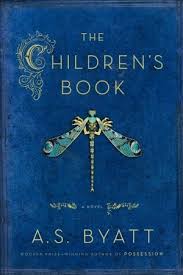
I want my book to appeal to people who enjoy reading Kate Atkinson's joy of story-telling; Jeanette Winterson's experimentation with language; Margaret Atwood's enthusiasm for developing character; E.L. Doctorow's exploration of historical accuracy and magic realism. I want to build a world which is as credible to the reader as A.S. Byatt's The Children's Book and as compelling as Sarah Waters' Fingersmith.
With the exception of Winterson, each of these authors have written historical fiction, in the sense that their books take place within an accurately rendered historical context. I've set my ambitions high: I consider these books to be some of the best novels ever written. But ambition is no bad thing if it will encourage me to strive to be the best writer that I can be and, even if I don't achieve the heights attained by these novelists, perhaps their readers will also find moments of pleasure, intrigue and entertainment in the company of my book.
So, in answer to the question of who I want to read my books, I want the readers of the other books listed here.
Monday, June 10, 2013
An Introduction
This blog is my way of 'giving back': the lessons that I'm learning and the issues that I'm facing are not unique to me. In many ways, I'm a typical first time author. I've got a pretty good book on my hands, and I'm trying to understand and manage what comes next. Hopefully, my experiences can help people map out their own paths towards publication.
Subscribe to:
Comments (Atom)